
The Case for Old Clubs
We have all seen it.
Standing on the driving range, there is always one.
The brand-new driver. The fresh irons. The shiny bag that still has that untouched factory look. Every club perfectly arranged, every headcover matching.
A two-dollar swing with a twenty-five-hundred-dollar bag.
I don't say that with judgment. I understand it. Golf is a beautiful and frustrating game, and part of the fun is dreaming that maybe the next piece of equipment will finally unlock something hidden inside our swing.
Maybe this driver will fix the slice.
Maybe these irons will finally make us consistent.
Maybe this putter will stop the three-putts.
Usually, it won't.
This is my argument for the older clubs.
The real ones.
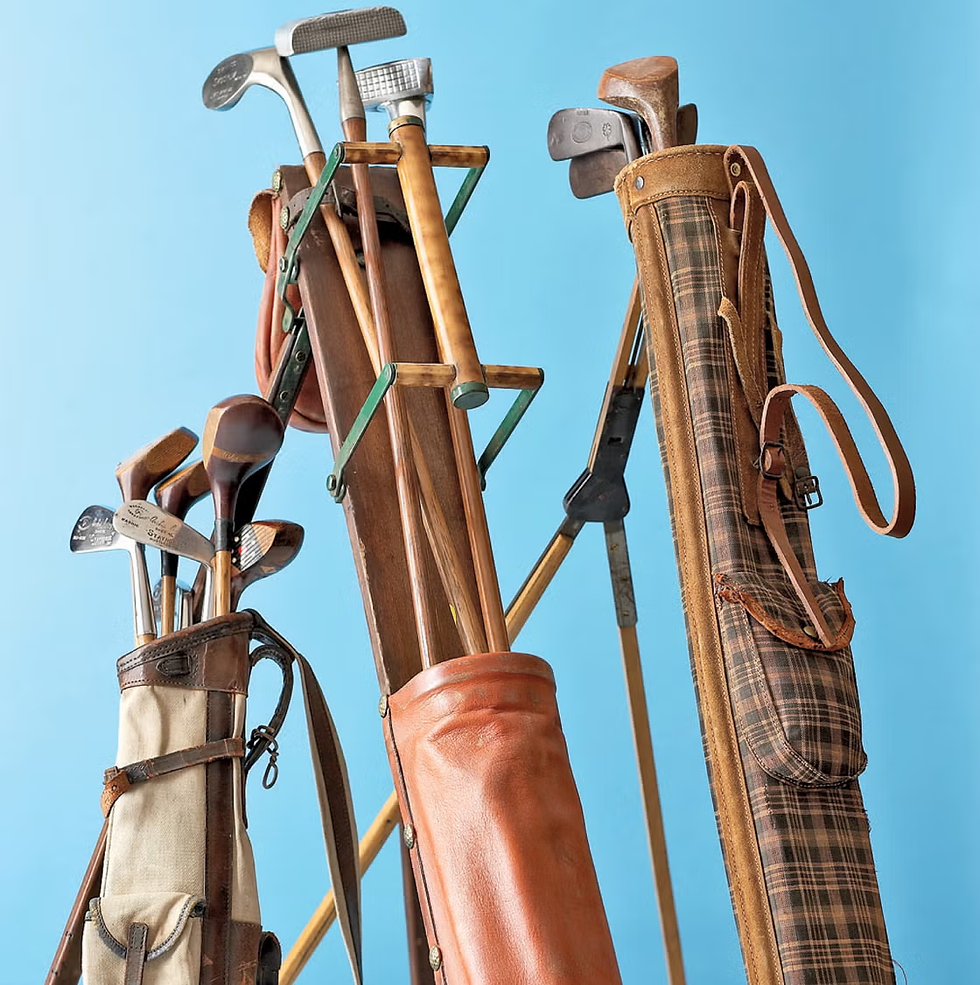
The clubs with scratches, dents, and stories. The bags covered in logos from courses scattered across the world. Headcovers that aren't just accessories but trophies from battles already fought.
The equipment that has lived.
I have always had a soft spot for older clubs.
Personally, I play a set of 1994 Ping Zing 2 irons and a Ping G400 driver that is now a decade old.

And I am not alone.
Some professional golfers continue to use equipment that most amateurs would consider ancient. If players at the highest level can still find value in older technology, maybe the gap between old and new isn't quite as large as we are led to believe.
Especially with irons.
Golf club technology has improved, but not nearly as much as the marketing departments would like us to believe.
Look at launch monitor numbers from different generations of clubs and the differences are often surprisingly small.
A new set might go farther.
But farther is not always better.
A lot of modern irons are designed around distance.
The lofts have become stronger.
A pitching wedge from today might travel the same distance as a seven iron from decades ago.
Which sounds impressive.
Until you think about what actually happens after the ball gets there.
Less loft means less spin.
Less spin means a lower descent angle.
And a lower descent angle means your ball is much less likely to stop when it reaches the green.
The goal of golf was never to hit a pitching wedge 150 yards.
The goal was to hit the right shot.
From the right distance.
On the right spot.
And that brings up another issue. A lot of golfers buy equipment designed for a game they don't actually play.
The best investment for most golfers is not another driver.
It is lessons.
It is practice.
It is playing more golf.
A year of consistent rounds and instruction will improve your game more than a new set of irons ever could.
The strange thing about modern fitting is that people often spend thousands of dollars getting clubs built around their current swing.
Then they improve. Or change.
Or develop new habits.
And suddenly those perfectly fitted clubs aren't fitted anymore.
The solution becomes buying another set.
It creates a strange cycle.
The better approach has always seemed simple to me. Get fitted for your swing.
Find clubs that match where you are.
Play them.
Improve.
Then, when your swing changes enough, adjust again.
The clubs should follow your game.
Your game shouldn't be chasing the clubs.
There is also something special about older equipment.
They were built to last.
Ping irons from the 1980s and 1990s are still everywhere. They are played by thousands of golfers every day.
They are almost indestructible.
You could probably throw one out of a moving car and it would survive better than most modern electronics.
Which is good news because every golfer knows eventually that five iron is going to end up somewhere it wasn't supposed to.
A cart path. A tree root. A bunker wall. The occasional moment of rage.
And somehow, the club keeps going.
The older I get, the more I appreciate the history of golf.
The worn grips. The faded logos.
The clubs that have seen hundreds of rounds.
There is something romantic about equipment that has already lived a life before it found you.
Golf has always been a game built on tradition.
Old courses.
Old stories.
Old swings.
Maybe old clubs belong there too.
Because sometimes the best equipment isn't the newest.
Sometimes it's the club that has already helped someone else create a few memories.


Comments