
One Night at The Black
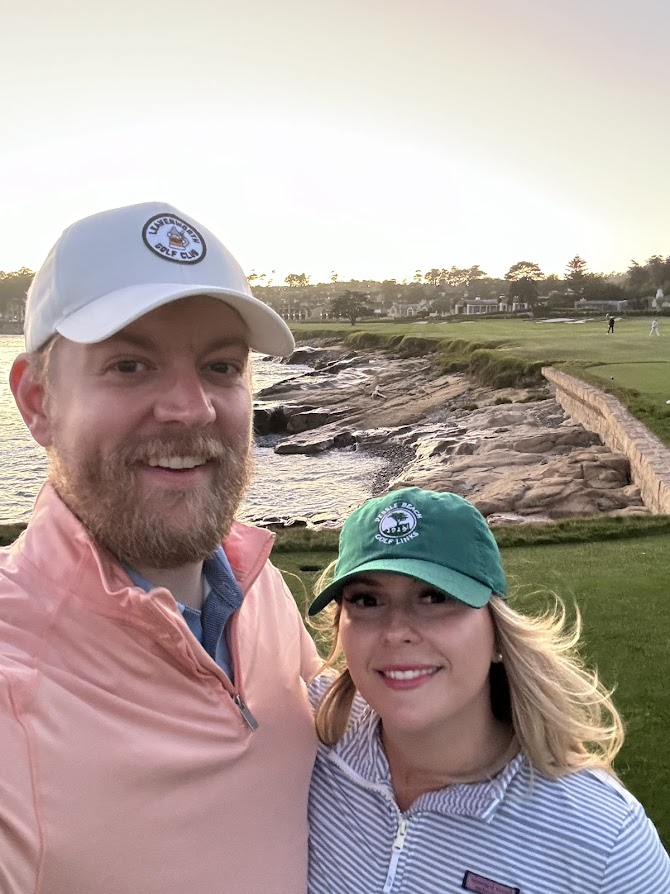
Bethpage Black Course 2024

Arriving at the campground beside Bethpage State Park at six in the evening, I could already feel the mixture of excitement and dread settling into my stomach.
That feeling only intensified knowing what the night ahead involved:
Sleeping in a parking lot for the chance to play the Black Course.
For golfers, Bethpage Black Course occupies a strange and sacred place. It’s known as “the people’s course,” one of the few public layouts in America where an average golfer can walk the same fairways that hosted multiple U.S. Opens, a PGA Championship, and the Ryder Cup.
Champions have won there.
And many more have been humbled there.
Hidden among the suburban sprawl and highway systems feeding Long Island, the course rises unexpectedly from the landscape like a giant green punishment device. Designed by A. W. Tillinghast in the 1930s during the tail end of the Great Depression, it became something far larger than anyone involved could have imagined—a public proving ground for every golfer convinced they’re better than they really are.
Including me.
I left my very patient wife back at the campsite and headed toward the quaint but adequate clubhouse shared by all five Bethpage courses. The building sits above the property like a watchtower overlooking the valleys below, where fairways disappear into corridors of trees and rough.
Inside, I asked the attendant how a non-New Yorker might secure a tee time on the Black Course.
His answer was simple:
“Get in line early.” Very early.
Preferably tonight.
So I returned to the truck and gathered my supplies for what I assumed would become a rugged overnight survival exercise:
A charged phone. A six-pack of beer. Several bags of snacks. And a dream.
Thankfully by this point I had already played several world class courses, but Bethpage felt different. Those places carried history and romance.
Bethpage carried intimidation.
The famous sign beside the first tee says it all:
“The Black Course Is An Extremely Difficult Course Which We Recommend Only For Highly Skilled Golfers.”
That’s less a warning and more a direct insult to most of us standing there.
Naturally, I ignored it completely.

I found my numbered parking spot and settled in for the evening.
Hours passed.
All six beers disappeared.
And somehow I remained completely alone in the lot.
What the attendant had failed to explain was that most groups arrive much later in the evening, sending one poor soul ahead to sleep in the parking lot while the rest of the group magically appears at sunrise to join the tee time.
By 8:00 p.m., I was mildly drunk, bored, and questioning every decision that had led me there.
Eventually, I folded myself awkwardly into the front seat of our F-250 and attempted to sleep.
I looked less like a golfer chasing a dream and more like a displaced hillbilly refugee hiding from the government.
Sometime in the morning, I was awakened by knocking on the window.
A very kind employee informed me it was time to collect my ticket and head toward the clubhouse.
Still half asleep, I looked out across the parking lot and realized that, somehow, the entire population of New York had materialized around me overnight.
Cars stretched endlessly behind mine like a Revolutionary War encampment preparing for battle.
Somehow, despite my confusion and near dehydration, I was first in line.

The very first tee time of the day was mine.
7:30 a.m.
Only three short hours away.
I sprinted back to the camper, consumed approximately half a gallon of coffee, and attempted to scrub the combined smell of diesel fuel, sweat, and cheap beer from my body.
Despite almost no sleep, adrenaline carried me forward.
I was about to play Bethpage Black.
My group consisted entirely of twenty-something golfers fueled almost exclusively by testosterone and ego.
Their golf games varied wildly.
Their confidence did not.
When the discussion about tee boxes came up, there was really only one socially acceptable answer:
The championship tees.
A decision I would come to regret almost immediately.
The first hole went surprisingly well.
In front of a half asleep crowd I managed a semi-sliced drive about 250 yards down the right side of the fairway.
A wedge to thirty feet.
Two putts.
Par.
For a brief moment, I thought maybe this entire experience would become one of the great rounds of my life.
Then Bethpage Black began biting back.
The opening hole is deceptive.
What follows is less a golf course and more an endurance test disguised as recreation.
Each hole demanded more distance than the last. Tee shots stretched farther and farther until some simply became physically unreasonable.
At one point, carrying the fairway required nearly 270 yards just to avoid disaster.
The rough was less rough and more wilderness preserve.
I spent most of the round hacking through tall grass and reeds like an exhausted explorer searching for civilization. Pars disappeared quickly from my expectations. Soon I was just hunting bogeys and emotional stability.
Walking the Black from the back tees with a push cart felt less like golf and more like reenacting a military campaign.
Somewhere on the back nine, my wife arrived after convincing a marshal to help locate me somewhere deep inside the forest.
By that point, my round had deteriorated significantly.
Thankfully, her mood had not.

Her laughter and encouragement became the antidote to the frustration building in my head. Gradually, the round stopped being about score altogether. It became a long walk through beautiful woods interrupted occasionally by good golf shots and frequently by terrible ones and accompanied laughter.
Oddly enough, that made it more enjoyable.
Despite struggling, I started to understand something important out there:
Courses like Bethpage Black demand a level of focus and consistency that professionals somehow maintain for four straight days under pressure.
I could barely maintain it for four holes.
That lesson alone was worth the trip.

The final hole climbs uphill toward the clubhouse, which after five exhausting hours looked less like architecture and more like a desert oasis.
I managed to finish with a par.
I shook hands with my fellow survivors, parked the push cart, and headed directly for the bar in search of beer, food, and emotional recovery.
Sitting there afterward, exhausted and humbled, I realized something important:
I no longer wanted to be my golfing heroes.
I was perfectly content simply admiring them.
Because surviving Bethpage Black—truly surviving it—requires a level of skill I had only just begun to appreciate.
Could I have enjoyed it more from a shorter tee box?
Absolutely.
But then I might not have learned the lesson the course intended to teach me.
I still think about Bethpage often.
Part of me wonders whether one day I’ll return strong enough to face it properly.
Another part of me suspects it’s better left alone—like some enormous monster sleeping in the distance, best admired from afar.


Comments